Storm Season RV Preparation and Emergency Repair Services in the Florida Panhandle
Hurricane season officially begins June 1, which means right now is when smart Florida Panhandle RV owners take action instead of hoping for the best. The Panama City area sits directly in historical storm paths, and hoping your RV survives without preparation is gambling with an investment that likely costs more than most people's cars.
Storm damage doesn't care about optimism or luck. It exploits every weak seal, vulnerable roof section, and unprotected component on your rig. Professional RV preparation before warnings are issued means you're ready when others are panicking.
At RV Coatings of Florida, we've seen what happens when owners wait until storm threats appear, and trust us, you don't want that kind of stress.
What Makes the Panhandle Particularly Vulnerable to Storm Damage?
Geography doesn't negotiate, and the Florida Panhandle catches systems from multiple angles throughout hurricane season. Storms entering the Gulf of Mexico often track northeast, putting Panama City, Destin, Freeport, and Fort Walton Beach directly in strike zones that have proven devastating in recent history.
The flat coastal terrain offers zero protection from storm surge, while the concentration of bays and inlets funnels water inland with frightening efficiency. Your RV faces threats from multiple directions simultaneously, including wind, rain, flying debris, and flooding.
Hurricane Michael in 2018 proved that even "prepared" areas get absolutely hammered when major systems arrive. The question isn't whether storms will threaten the Panhandle this season. The question is whether your RV will survive when they do.
How Should You Inspect Your RV for Storm Vulnerabilities?
Start with your RV roof because that's where most storm damage originates and spreads from. Check every seal around vents, skylights, air conditioning units, and roof edges for cracks, gaps, or degradation that creates water entry points during driving rain.
Examine sidewall seams and window seals with equal scrutiny because wind-driven rain exploits weaknesses you'd never notice during normal weather. Test awning mechanisms and slide-out seals since these moving components often fail first under storm stress. Don't forget underneath. Ground clearance determines flood vulnerability, and knowing your RV's lowest point helps you plan evacuation triggers.
Professional inspection catches problems your eye might miss, especially subtle roof degradation or seal failures that only reveal themselves under pressure. Discovering vulnerabilities now means fixing them before storms test them.
Why Does Roof Coating Provide Critical Storm Protection?
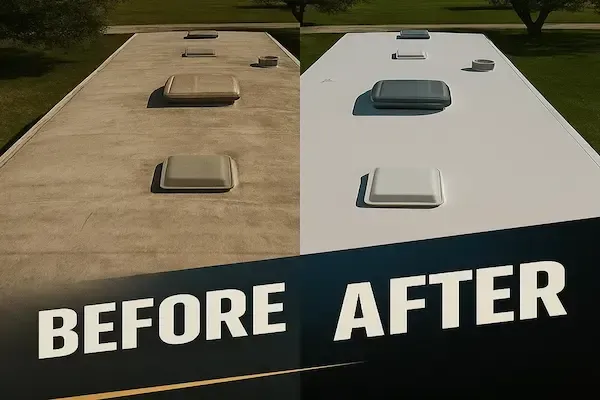
Think of professional roof coating as armor for the most vulnerable part of your RV. Quality ceramic coating or polyurethane application creates a seamless, flexible barrier that sheds water instead of absorbing it, preventing the moisture intrusion that causes catastrophic interior damage during sustained rain events.
The coating also reinforces existing seals and creates additional protection over seams that typically fail first. Beyond waterproofing, proper coating strengthens your roof's resistance to debris impacts that puncture or tear unprotected surfaces during high winds.
UV protection matters too because Florida's sun degrades roof materials throughout the year, making them more vulnerable when storms arrive. A well-coated roof going into hurricane season performs exponentially better than one that's been baking unprotected in the Panhandle sun for months. This isn't optional maintenance. It's strategic protection.
What Emergency Supplies Should Be RV-Accessible?
Having supplies means nothing if you can't reach them when power's out and water's rising. Store emergency essentials in quickly accessible compartments you can grab even in darkness or chaos. Critical items include battery-powered lights, first aid supplies, important documents in waterproof containers, emergency cash, prescription medications for at least two weeks, and communication devices with backup power.
Don't forget RV-specific supplies like sealant tape for emergency leak repairs, tarps and tie-downs, extra batteries for smoke and carbon monoxide detectors, and tools for quick repairs. Keep fresh water stored separately from your RV's tank because municipal supplies often fail during major storms. Food supplies should require no cooking or refrigeration since power outages are guaranteed.
Having everything accessible in designated emergency storage means you're ready to shelter in place or evacuate without frantic searching when warnings are issued.
Where Are the Safest Evacuation Routes from Coastal Areas?
Know your evacuation routes before you need them because waiting until warnings are issued means sitting in gridlock while the storm approaches. From Panama City Beach and coastal areas, Highway 77 north and Highway 79 north provide primary evacuation corridors away from surge zones.
Destin and Fort Walton Beach residents should plan routes using Highway 85 north or Interstate 10 east, avoiding coastal roads that flood quickly. Never assume you'll figure it out when the time comes. Drive your planned route now, identify where you'll stop for fuel and rest, and confirm your destination accepts RVs during emergencies.
Many evacuation shelters prohibit RVs, so know which facilities along your route accommodate them. Gas stations run dry fast during evacuations, so keep tanks at least half full throughout hurricane season.
Time your departure before mandatory evacuations are issued because once everyone's ordered out simultaneously, roads become parking lots and what should take three hours takes twelve.
Get Professional Storm Preparation from RV Coatings of Florida
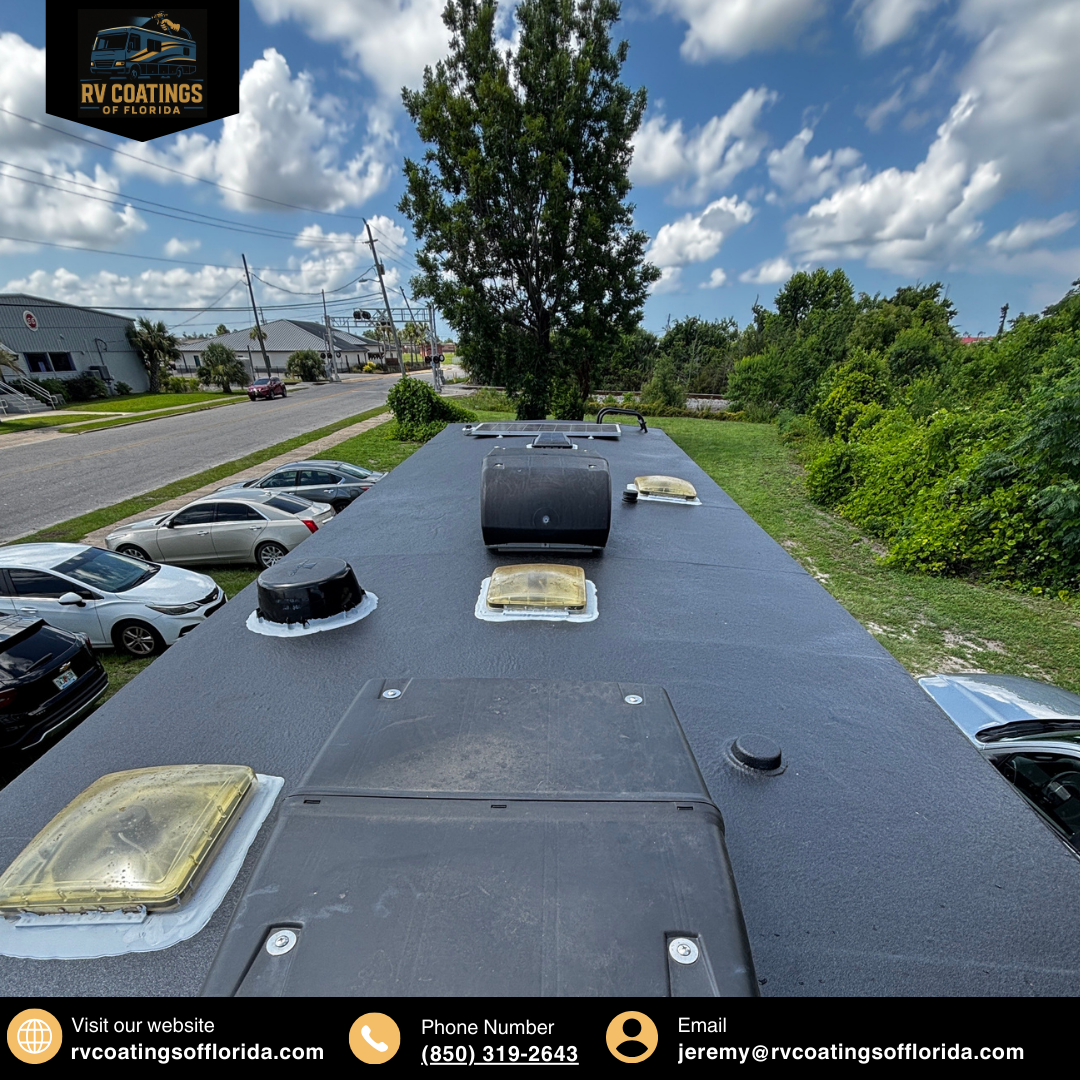
Don't wait for storm warnings to discover your RV isn't ready. RV Coatings of Florida delivers comprehensive storm preparation services throughout the Florida Panhandle, including professional roof coating, vulnerability inspections, emergency repair capabilities, and expert guidance on protecting your investment. Our team understands Panhandle storm risks because we live here, too.
Call us at (850) 319-2643 to schedule your pre-season inspection and protective services. We offer RV storm damage repair when disasters strike and preventive services that help you avoid damage altogether.
📍 Visit us: 1347 Florida Ave, Panama City, FL
⏰ Hours: Monday-Friday 7:00 AM - 4:30 PM
Serving Panama City, Destin, Freeport, Fort Walton Beach, and throughout the Florida Panhandle with professional RV storm protection and emergency repair services. Contact RV Coatings of Florida today and prepare properly.
FREQUENTLY ASKED QUESTIONS
When should I start preparing my RV for hurricane season in Florida?
A: Begin preparation in April or early May, at least 4-6 weeks before hurricane season officially starts on June 1. This timing allows you to schedule professional inspections, complete any needed repairs, and implement protective measures without the rush and limited availability that occurs once storm threats develop.
Can professional roof coating really protect my RV during a hurricane?
A: While no coating makes your RV hurricane-proof, professional ceramic or polyurethane coating significantly improves water resistance, strengthens seal integrity, and provides debris impact protection that uncoated roofs lack. Properly coated roofs perform substantially better during sustained rain and high winds than untreated surfaces.
Should I evacuate my RV or shelter in place during hurricane warnings?
Always follow official evacuation orders, and if you're in designated surge zones or mobile home parks, evacuate immediately. RVs offer minimal hurricane protection and should never be considered safe shelter during major storms, regardless of tie-downs or protective measures you've implemented.
Does RV Coatings of Florida provide emergency storm damage repair?
Yes, we offer emergency repair services for storm-damaged RVs, including roof repairs, leak sealing, water damage restoration, and structural assessment. Contact us at (850) 319-2643 immediately after storm events for emergency service scheduling and damage evaluation.
What's the most common storm damage you see on Florida Panhandle RVs?
Water intrusion from failed roof seals and seams causes the most extensive and expensive damage, often leading to interior rot, mold, and electrical system failures. Wind-driven rain exploits even minor seal degradation, making preventive roof coating and seal maintenance critical for Panhandle RV owners.
Articles you might be interested in
Signs Your RV Needs Electrical Repair - RV Repair Service Panama City, FL
Premium RV Ceramic Coating Services from Panama City to Destin, Florida
Why Lynn Haven and Bay County RV Owners Are Choosing Ceramic Coating Over Traditional Roof Sealants
Why Florida’s Climate Makes RV Roof Coatings a Must-Have Investment

